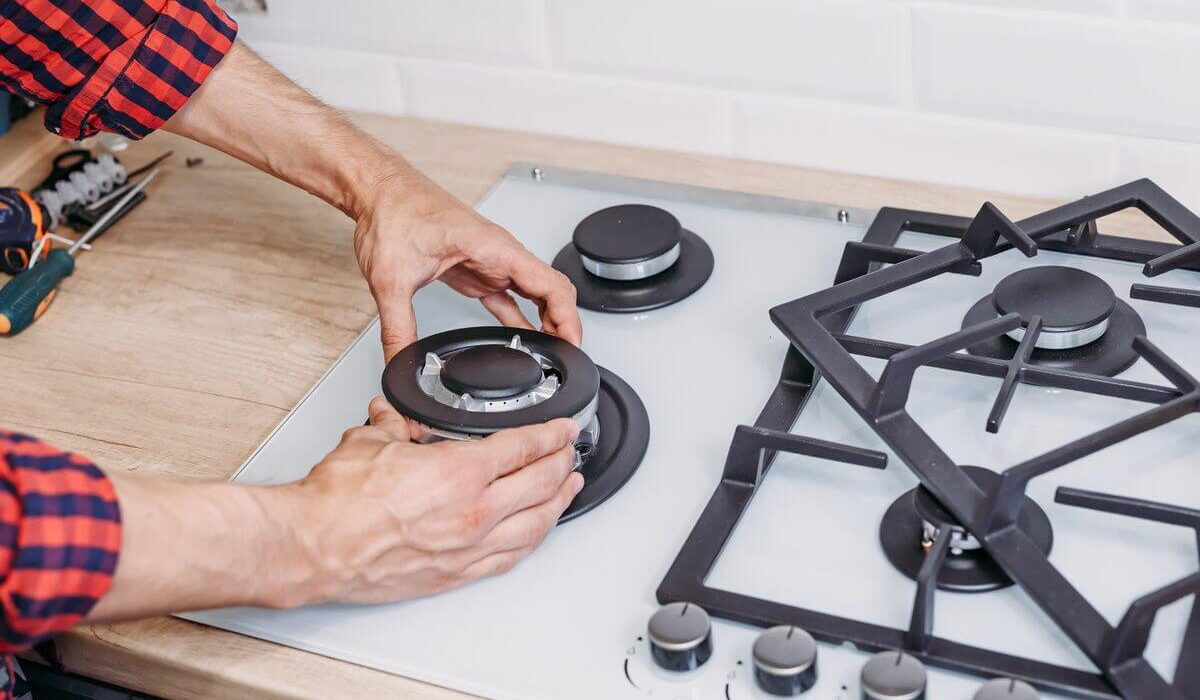
Reasons Gas Hob Faults Require Certified Professionals Rather Than DIY Fixes
Gas appliances and DIY repair have a relationship that professionals in the trade describe with a kind of weary patience. The person who has successfully replaced a tap washer, fixed a running toilet, and rewired a light switch reasonably concludes that a gas hob burner that will not light is probably in the same category of fixable. It is not. The difference between a plumbing repair gone wrong and a gas repair gone wrong is the difference between a mess and a disaster.
Gas hobs fail in several predictable ways. Igniters stop sparking. Burner caps build up debris and restrict gas flow. Thermocouples that sense whether a flame is present wear out and cause the valve to shut off gas even when the burner is lit. Regulators degrade. Flexible hoses connecting the hob to the gas supply age and crack. Each of these faults has a DIY-looking surface and a reason why the surface appearance is misleading.
1. The Certification Requirement Exists for a Reason
In New Zealand, gas work must be carried out by a licensed gasfitter. This is not a technicality that experienced handypeople can reasonably work around. It is a legal requirement grounded in the fact that incorrect gas work kills people. Gas hob repair by a licensed gasfitter means the work is done by someone who has been trained specifically in gas system behavior, tested for competence, and is legally accountable for the work they carry out. A YouTube tutorial watched carefully is not equivalent to that.
When a licensed gasfitter completes gas work, they issue a Certificate of Compliance. That certificate matters for insurance purposes, for any future sale of the property, and as documentation that the work was done correctly by someone qualified to do it. Work completed without a certificate has no equivalent protection.
2. Gas Leaks Are Not Always Obvious
It is unreliable to assume that a gas leak would be instantly apparent by scent. Although gas has an odorant added to it, particularly to make leaks visible, minor leaks in ventilated or enclosed places can build up to hazardous amounts before they are discovered. Even a connection that appears and feels safe may be leaking at a pace that is both quick enough to be noticeable and slow enough to go unnoticed.
Testing gas connections requires equipment and technique that produces a verifiable result rather than a visual inspection that produces a guess.
3. Thermocouple and Valve Work Carries Specific Risks
The thermocouple is the safety device that shuts off gas flow if the flame is extinguished. It is designed to prevent unlit gas from continuing to flow into the kitchen. Replacing or bypassing one incorrectly leaves the safety system non-functional in a way that is not immediately apparent. The hob works. The burner lights. Everything seems fine right up until it is not. This is the category of repair where incorrect DIY work creates a hazard that does not announce itself.
4. Hose and Connection Integrity
Flexible gas hoses connecting a hob to the gas supply have a service life. They fail, break, and deteriorate at fittings. Knowing what to look for and how to assess the connection’s integrity is necessary for properly inspecting and replacing them. Even a hose that appears undamaged from the outside can be compromised in ways that can only be found by a thorough leak test.
Conclusion
Gas hob faults are not the place to test whether general competence in home repairs extends to gas systems. The skills do not transfer, and the consequences of getting it wrong are in a different category from other household repairs. A licensed gasfitter costs money. So does everything else that happens when gas work goes wrong.